

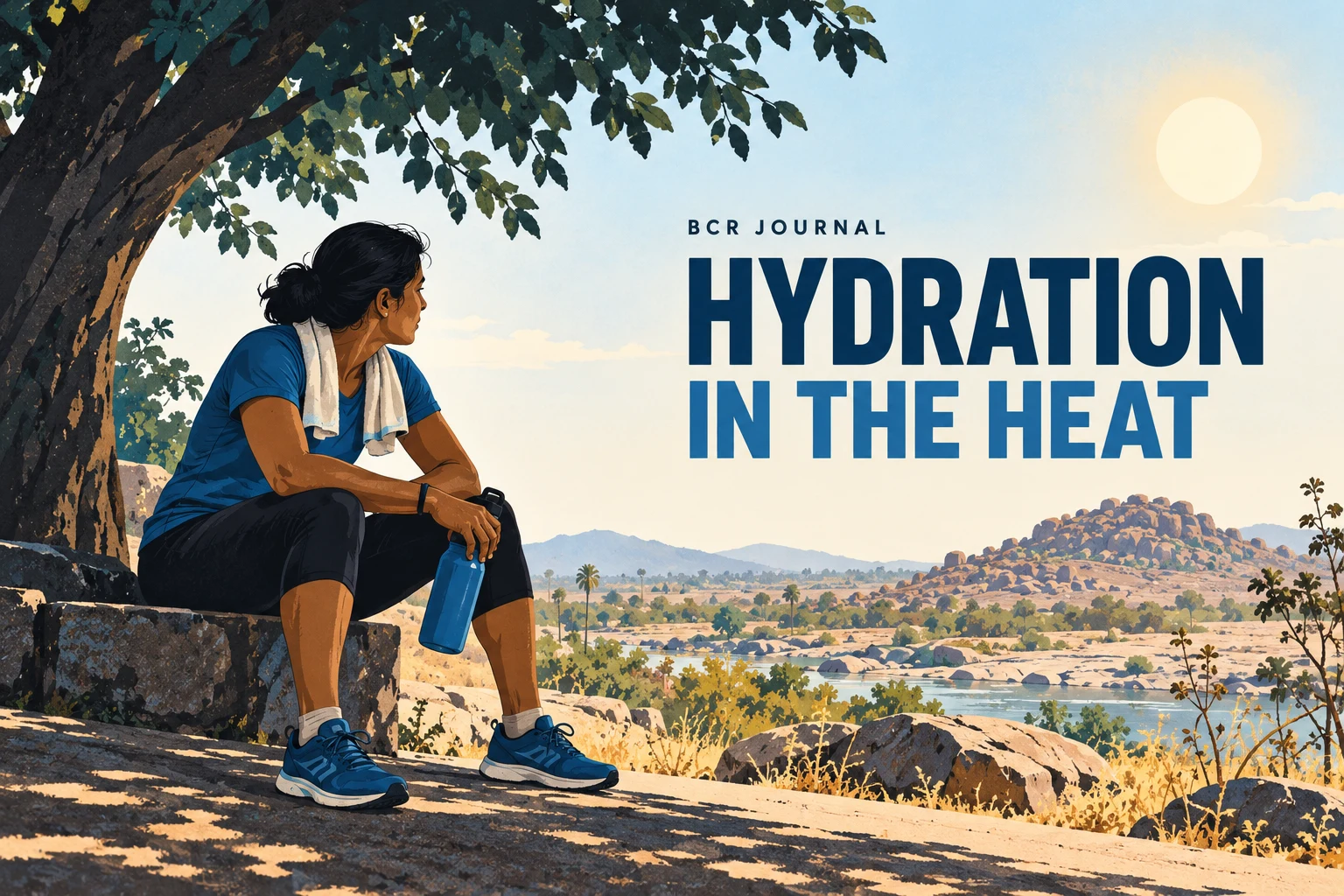
A route that feels comfortable on a cool morning can feel very different as the sun rises. For runners and cyclists in places like Ballari, hydration deserves a place in the training plan alongside distance and pace. But carrying a bottle is only part of the answer: timing, shade, effort and knowing when to stop matter too.
Why hot conditions change the session
Exercise produces heat, and sweating helps your body cool as sweat evaporates. Hot conditions increase the challenge of shedding that heat. Humidity can make evaporation less effective, while direct sun adds to the load. You may lose more fluid than on a cooler day and find your usual pace harder. Dehydration can compound heat strain; drinking water does not make an unsafe session safe.
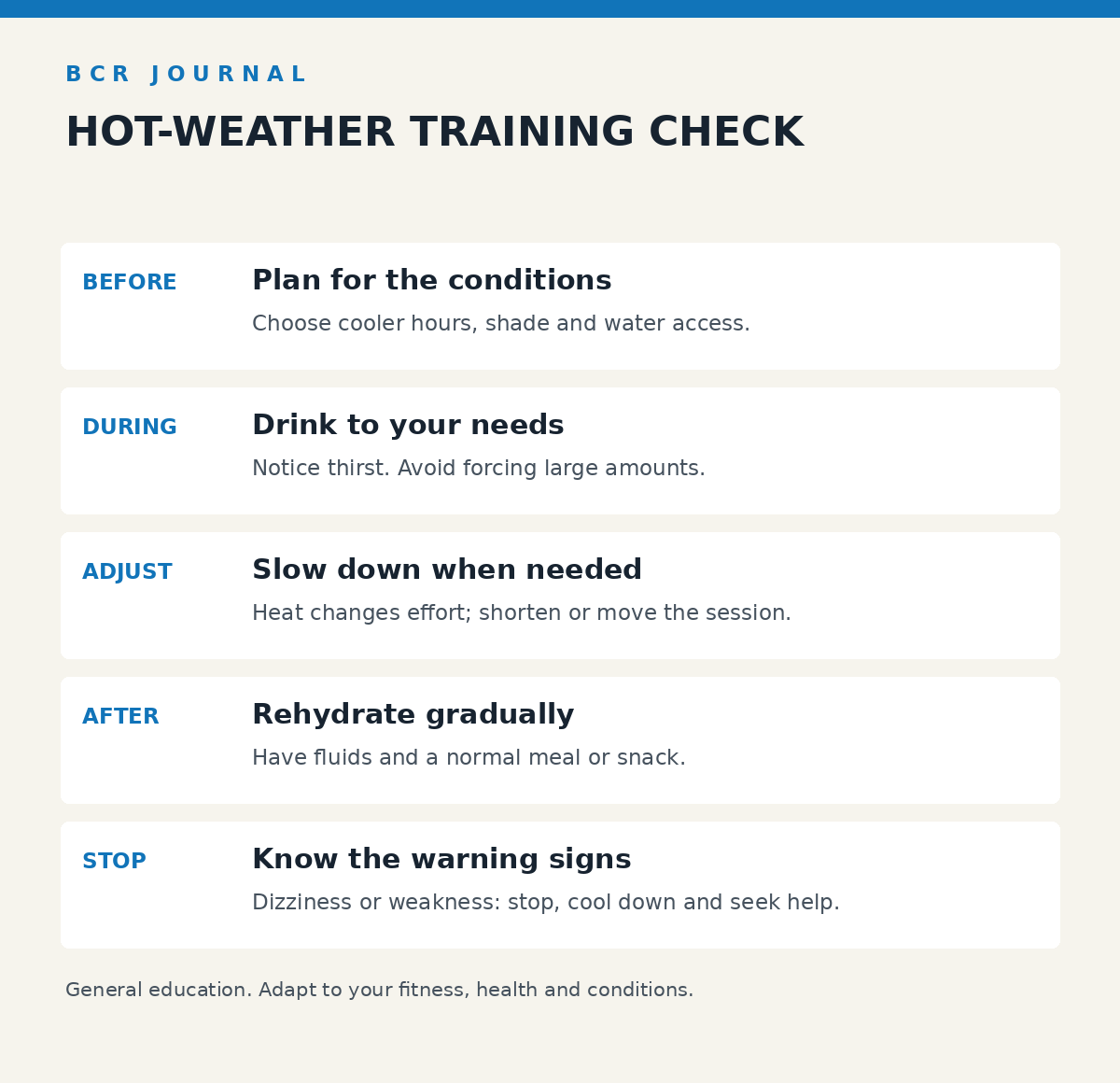
Before you leave: plan water access
- Choose cooler hours and check the actual forecast, rather than assuming every early morning is safe.
- Start normally hydrated. Drink regularly through the day instead of trying to catch up with a large amount immediately before exercise.
- Carry water or plan reliable refill points. A long out-and-back route needs a return-leg plan too.
- Tell a training partner your route and take a phone. If heat conditions are severe, shorten, move indoors or postpone the workout.
During the session: match drinking to your needs
There is no single hourly amount that suits every runner. Sweat losses depend on body size, effort, weather and individual differences. For most recreational sessions, notice thirst and drink when needed, with water readily available. Do not deliberately ignore thirst, and do not force liters just to meet a rule. Longer, demanding hot-weather sessions may need a practiced individual plan developed with a qualified sports professional.
Water, electrolytes and food
Water is often enough for a short, easy session. Longer exercise or substantial sweating may make sodium-containing drinks or foods useful, alongside appropriate fueling. Electrolytes are not a license to overdrink: sports drinks can also cause problems when consumed in excess. Avoid improvised strong salt mixtures. If you have a prescribed fluid or salt restriction, discuss exercise hydration with your doctor/dietician.
After training: recover gradually
Cool down in shade, drink gradually and have a normal meal or snack. Notice how you feel over the next few hours. Urine colour can provide a rough clue, but it is affected by supplements and other factors; it is not a diagnosis or a reason to chase completely clear urine. Repeatedly finishing depleted suggests your route, pace or hydration plan needs adjusting.
Do not confuse more water with more safety
Drinking beyond your fluid losses can dilute blood sodium, causing exercise-associated hyponatraemia. This can occur with water or sports drinks, particularly during prolonged exercise. The goal is appropriate hydration—not the largest possible intake. Avoid finishing a session heavier because you have forced excessive fluids.
Warning signs: stop first, assess second
Dizziness, weakness, nausea or a worsening headache mean stop exercising, move to a cool place and get help if symptoms persist or worsen. Confusion, collapse or seizures are an emergency: call emergency services and begin rapid cooling while help is on its way. Heatstroke can occur even when someone is still sweating. Do not give drinks to someone who is confused or unable to swallow safely, and do not assume every unwell athlete simply needs more water.
The Ballari habit: arrive with a water plan, keep the effort appropriate to the day, and look out for the person beside you.
Your next step with BCR
Want company for your next session? Message BCR on WhatsApp to check the current meeting point and suitable group. Tell us if you are new or returning so we can help you start at a comfortable level.
General training education, not an individual medical or coaching prescription. If you have health concerns, current pain or a condition that affects exercise, seek appropriate professional advice.